
This Mother-Daughter Duo Share The Secrets Behind Their Viral Skincare Advice

Not many people can say they grew up with a mom who doubled as their very own dermatologist. That is unless you’re Davlyn Mosley, founder of the skincare brand Namesake, who grew up with clinical and motherly advice, right within the comfort of her home.
Davlyn was introduced to the world of skincare and dermatology — quite literally — from the womb. Her mother, Namesake advisor, and board-certified dermatologist, Dr. Lynn McKinley-Grant was pregnant with Davlyn during her residency at New York University. As Davlyn grew older, she continued to visit her mother’s lab and developed an interest in the space
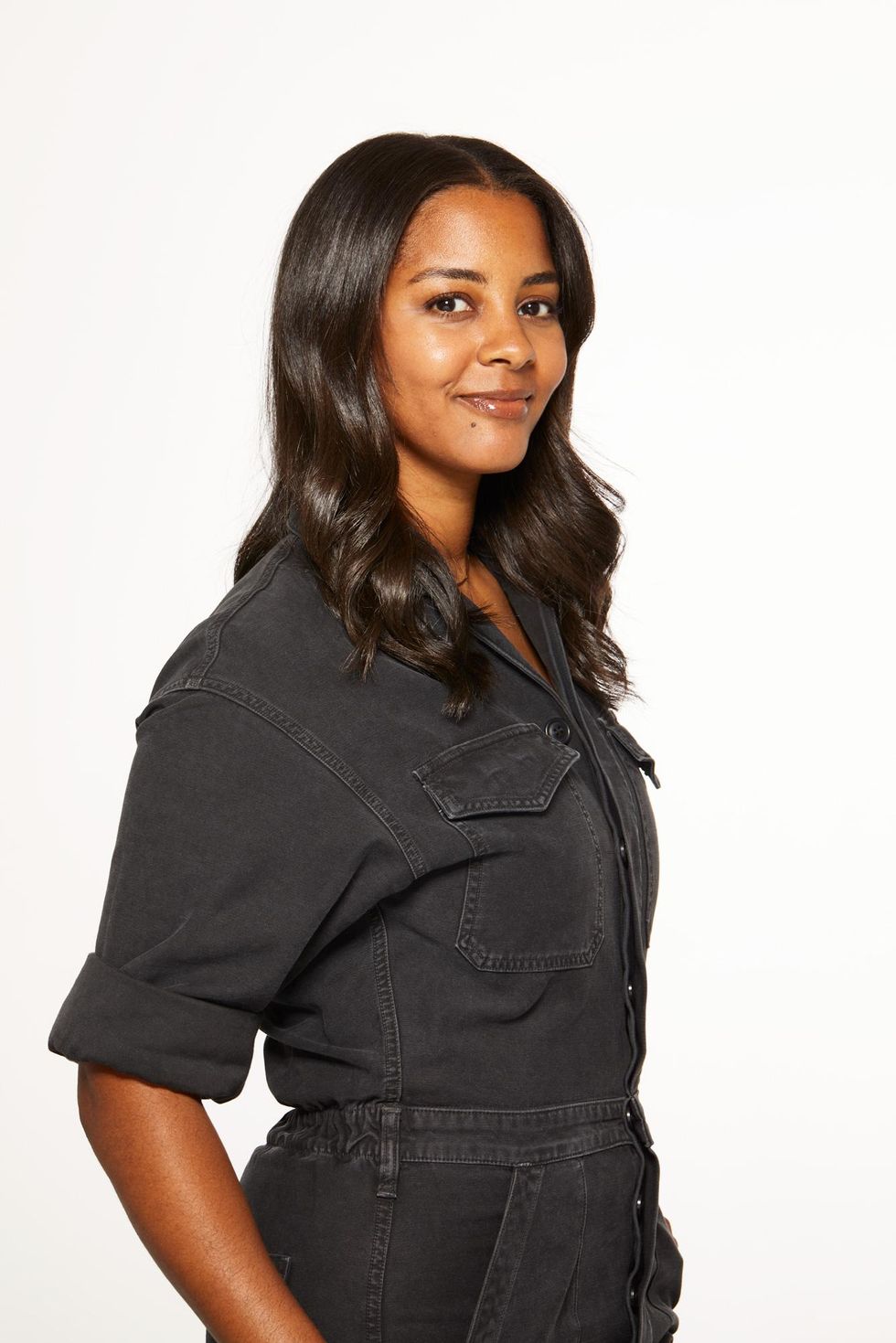
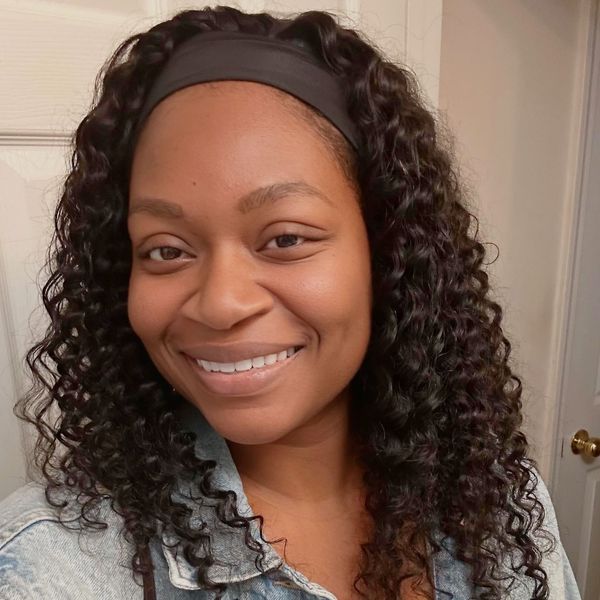
Davlyn Mosley
Photos courtesy of Davlyn Mosley
“I spent my youth going with my mom to conferences, working in her practice, and along the way learning the ins and outs of skincare,” Davlyn tells xoNecole. “I was always fascinated by new, innovative products and treatments that would come into her office.”
While the early exposure was initially out of the necessity that comes with balancing motherhood and a full-time career, Dr. McKinley-Grant shares how the influence it left on her daughter was enduring. “Now I know that exposing her to [dermatology] was a great thing. These were experiences that I didn't even know would impact her but now I do,” she says. “[By] creating a skincare product that requires lab work, a good work ethic, and a passion for her work.”
While Davlyn’s career path wasn’t linear, the experience she picked up through marketing and storytelling later served her in a tangible way. “I spent 15 years working specifically at ad agencies and most recently Google, where I was before I launched Namesake,” she shares. “All these years were the building blocks of what I am doing now… and when I look back it, all makes sense.”
Davlyn’s leap of faith landed her in the driver’s seat as a beauty founder with products that prioritize the concerns of women with melanated skin and pay homage to her earliest and most cherished muse. “My mom is the inspiration behind Namesake,” Davlyn says. “In building Namesake, I wanted to pass down all of the knowledge that I’ve learned from my mom and develop products that use some of our favorite ingredients that are amazing for melanin-rich skin.”
Today, Davlyn continues to pass down her mother-daughter skincare do’s and don’ts through viral TikToks. With advice ranging from putting sunscreen on your ears, not eating citrus in the sun, or rubbing your eyes too hard (or at all), Davlyn and her mother Dr. McKinley-Grant are now imparting their expertise to xoNecole.

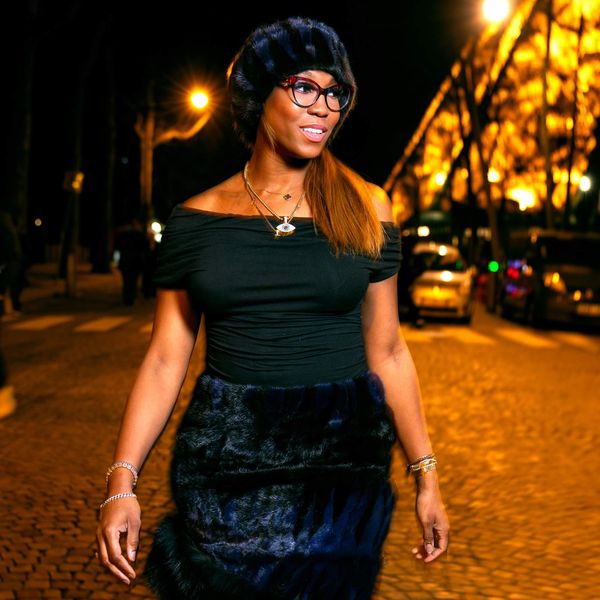
Dr. Lynn McKinely-Grant
Photo courtesy of Dr. Lynn McKinely-Grant
On Dr. McKinley-Grant’s earliest memories of skincare, from one generation to another:
“My introduction to skincare was very early on from my mother and my grandmother. Back then the two main products for the skin were POND'S Cold Cream and Vaseline,” Dr. McKinley-Grant recalls. “All of the aunties used these their whole lives. We would cleanse our faces with water—we didn’t use a lot of soap on our faces. We didn’t use sunscreen but we were always under umbrellas at the beach protecting ourselves from the sun. I remember as a kid, Vaseline seemed to keep my face warmer in the winter, and after my acne resolved in my teenage years, it seemed to be great to use at night.”
On the formulation behind Namesake’s hero product, the Daily Moisturizer:
“I wanted to create the perfect moisturizer, the one that I had always been searching for. Something that was not only luxurious and hydrating but also brightens and smoothes your skin without irritation, Davlyn explains. “I was constantly cross-checking our ingredient list with the National Eczema Society’s List of Ingredients to Avoid, Sephora and Credo’s Clean standards, and, of course, calling my mom about any new ingredient our lab would suggest. The whole process took two years, which also included extensive irritation testing in a 3rd party lab.
Dr. McKinley-Grant adds, “When creating products for skin of color, it’s really important to use non-irritating and non-comedogenic ingredients. Any inflammation caused by a product can result in hyperpigmentation so we had to be very thoughtful about the formulation. Davlyn’s skin has always been sensitive to certain ingredients so I was able to advise her on ingredients to avoid that I have seen patients react negatively to.”
How Davlyn’s challenges with her “sensitive and reactive” skin became a motivating factor in the creation of Namesake:
“I’ve gone through so many phases when it comes to skincare. My skin has always been sensitive but I always wanted to try the latest and greatest products,” she shares. “As I got older I wanted to use products that were effective for the bright, glowy look that so many of us want but became frustrated when they broke me out or irritated my skin. This was a huge motivator in creating Namesake: finding this balance of effective, clinically-tested ingredients in a non-irritating formulation created with my skin tone in mind.”
Of the many viral do’s/don’ts her mom has imparted, Davlyn shares the one piece of advice you should pay attention to the most:
“I would say rubbing your eyes too hard, which is, I admit, a hard thing not to do,” Davlyn shares. “It’s something my mom used to tell me to stop doing, and still would if she caught me doing it today! Darkness around the eyes is a top concern for women of color, so it's really important to treat the delicate skin around your eyes as gently as you can. If you find that you’re rubbing your eyes frequently, over time that may contribute to some of the darkness and loss of elasticity that we're experiencing.”
She continues, “My mom always told me that it’s important to figure out why your eyes are so itchy. Are they dry? Are you sensitive to the mascara that you’re wearing? Do you have allergies in general? Try to figure out what the issue is and that’s the first step.”
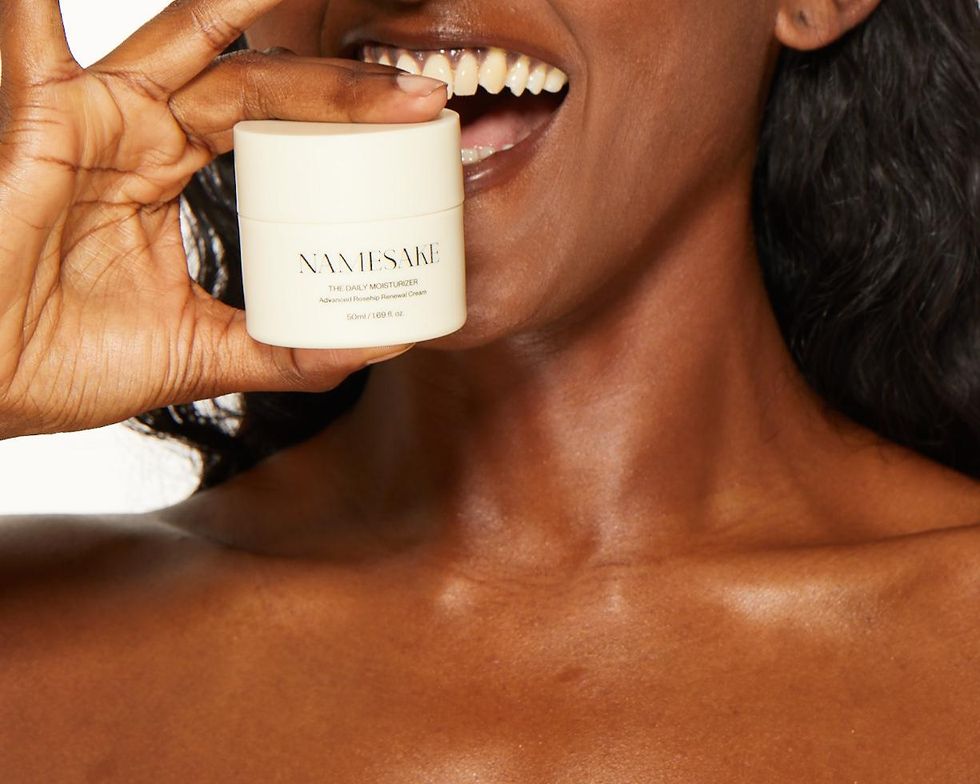
Photo courtesy of Davlyn Mosely
On how to tackle a common dermatological concern, traction alopecia, affecting Black women:
“Prevention is key,” Dr. McKinley-Grant explains. “Avoid tight ponytails, braids, and other styles that pull on your scalp. Brushing the hair causes more breakage; gently smoothing down your edges with a light oil is a good way to go. If you wear a weave, the cornrows shouldn’t be too tight and the weight of the hair is also something to consider. Glues and other adhesives can also pull out your hair. Traction alopecia can become scarring hair loss. Once you get the scarring the hair doesn’t come back. There are procedures to resolve this like scalp reduction surgery.”
Their current skincare must-haves:
“I’m a fan of Clinical’s ProHeal Serum. It’s a great anti-aging, vitamin C serum that absorbs nicely and adds a bit of a glow to the skin,” Dr. McKinley-Grant shares.
For Davlyn, “I’ve been loving this mineral sunscreen from Koa Skin. It’s hydrating but not greasy and it doesn’t break me out or leave a white cast on my skin. The packaging is super cute and I actually love using it every day.”
On how to upgrade your skincare routine from winter into spring:
Dr. McKinley-Grant says, “Our skin needs extra moisture during the winter months but as we head into spring you’ll likely find that your skin doesn’t need as much. You may benefit from using lighter sunscreen than you would have used in the winter.”
How keeping a simple, consistent skincare regime has been the key to Davlyn’s timeless, youthful skin:
“People are always shocked when I tell them I’m 37. My audience on TikTok is younger anyway and assumed I was their age,” Davlyn shares amusingly. “My whole life I’ve used skincare with ingredients that are highly researched and clinically tested. I’ve always tried to be very gentle with my skin and always keep it moisturized. I think consistency is really important. Having this simple, consistent routine most of my life has paid off, thanks to my mom.”
Let’s make things inbox official! Sign up for the xoNecole newsletter for daily love, wellness, career, and exclusive content delivered straight to your inbox.
Feature image courtesy of Davlyn Mosley and Dr. McKinley-Grant
Because We Are Still IT, Girl: It Girl 100 Returns
Last year, when our xoNecole team dropped our inaugural It Girl 100 honoree list, the world felt, ahem, a bit brighter.
It was March 2024, and we still had a Black woman as the Vice President of the United States. DEI rollbacks weren’t being tossed around like confetti. And more than 300,000 Black women were still gainfully employed in the workforce.
Though that was just nineteen months ago, things were different. Perhaps the world then felt more receptive to our light as Black women.
At the time, we launched It Girl 100 to spotlight the huge motion we were making as dope, GenZennial Black women leaving our mark on culture. The girls were on the rise, flourishing, drinking their water, minding their business, leading companies, and learning to do it all softly, in rest. We wanted to celebrate that momentum—because we love that for us.
So, we handpicked one hundred It Girls who embody that palpable It Factor moving through us as young Black women, the kind of motion lighting up the world both IRL and across the internet.
It Girl 100 became xoNecole’s most successful program, with the hashtag organically reaching more than forty million impressions on Instagram in just twenty-four hours. Yes, it caught on like wildfire because we celebrated some of the most brilliant and influential GenZennial women of color setting trends and shaping culture. But more than that, it resonated because the women we celebrated felt seen.
Many were already known in their industries for keeping this generation fly and lit, but rarely received recognition or flowers. It Girl 100 became a safe space to be uplifted, and for us as Black women to bask in what felt like an era of our brilliance, beauty, and boundless influence on full display.
And then, almost overnight, it was as if the rug was pulled from under us as Black women, as the It Girls of the world.
Our much-needed, much-deserved season of ease and soft living quickly metamorphosed into a time of self-preservation and survival. Our motion and economic progression seemed strategically slowed, our light under siege.
The air feels heavier now. The headlines colder. Our Black girl magic is being picked apart and politicized for simply existing.
With that climate shift, as we prepare to launch our second annual It Girl 100 honoree list, our team has had to dig deep on the purpose and intention behind this year’s list. Knowing the spirit of It Girl 100 is about motion, sauce, strides, and progression, how do we celebrate amid uncertainty and collective grief when the juice feels like it is being squeezed out of us?
As we wrestled with that question, we were reminded that this tension isn’t new. Black women have always had to find joy in the midst of struggle, to create light even in the darkest corners. We have carried the weight of scrutiny for generations, expected to be strong, to serve, to smile through the sting. But this moment feels different. It feels deeply personal.
We are living at the intersection of liberation and backlash. We are learning to take off our capes, to say no when we are tired, to embrace softness without apology.
And somehow, the world has found new ways to punish us for it.

In lifestyle, women like Kayla Nicole and Ayesha Curry have been ridiculed for daring to choose themselves. Tracee Ellis Ross was labeled bitter for speaking her truth about love. Meghan Markle, still, cannot breathe without critique.
In politics, Kamala Harris, Letitia James, and Jasmine Crockett are dragged through the mud for standing tall in rooms not built for them.
In sports, Angel Reese, Coco Gauff, and Taylor Townsend have been reminded that even excellence will not shield you from racism or judgment.

In business, visionaries like Diarrha N’Diaye-Mbaye and Melissa Butler are fighting to keep their dreams alive in an economy that too often forgets us first.
Even our icons, Beyoncé, Serena, and SZA, have faced criticism simply for evolving beyond the boxes society tried to keep them in.
From everyday women to cultural phenoms, the pattern is the same. Our light is being tested.

And yet, somehow, through it all, we are still showing up as that girl, and that deserves to be celebrated.
Because while the world debates our worth, we keep raising our value. And that proof is all around us.
This year alone, Naomi Osaka returned from motherhood and mental health challenges to reach the semifinals of the US Open. A’ja Wilson claimed another MVP, reminding us that beauty and dominance can coexist. Brandy and Monica are snatching our edges on tour. Kahlana Barfield Brown sold out her new line in the face of a retailer that had been canceled. And Melissa Butler’s company, The Lip Bar, is projecting a forty percent surge in sales.

We are no longer defining strength by how much pain we can endure. We are defining it by the unbreakable light we continue to radiate.
We are the women walking our daily steps and also continuing to run solid businesses. We are growing in love, taking solo trips, laughing until it hurts, raising babies and ideas, drinking our green juice, and praying our peace back into existence.
We are rediscovering the joy of rest and realizing that softness is not weakness, it is strategy.
And through it all, we continue to lift one another. Emma Grede is creating seats at the table. Valeisha Butterfield has started a fund for jobless Black women. Arian Simone is leading in media with fearless conviction. We are pouring into each other in ways the world rarely sees but always feels.

So yes, we are in the midst of societal warfare. Yes, we are being tested. Yes, we are facing economic strain, political targeting, and public scrutiny. But even war cannot dim a light that is divinely ours.
And we are still shining.
And we are still softening.
And we are still creating.
And we are still It.

That is the quiet magic of Black womanhood, our ability to hold both truth and triumph in the same breath, to say yes, and to life’s contradictions.
It is no coincidence that this year, as SheaMoisture embraces the message “Yes, And,” they stand beside us as partners in celebrating this class of It Girls. Because that phrase, those two simple words, capture the very essence of this moment.
Yes, we are tired. And we are still rising.
Yes, we are questioned. And we are the answer.
Yes, we are bruised. And we are still beautiful.

This year’s It Girl 100 is more than a list. It is a love letter to every Black woman who dares to live out loud in a world that would rather she whisper. This year’s class is living proof of “Yes, And,” women who are finding ways to thrive and to heal, to build and to rest, to lead and to love, all at once.
It is proof that our joy is not naive, our success not accidental. It is the reminder that our light has never needed permission.
So without further ado, we celebrate the It Girl 100 Class of 2025–2026.
We celebrate the millions of us who keep doing it with grace, grit, and glory.
Because despite it all, we still shine.
Because we are still her.
Because we are still IT, girl.
Meet all 100 women shaping culture in the It Girl 100 Class of 2025. View the complete list of honorees here.
Featured image by xoStaff
Because We Are Still IT, Girl: It Girl 100 Returns
Last year, when our xoNecole team dropped our inaugural It Girl 100 honoree list, the world felt, ahem, a bit brighter.
It was March 2024, and we still had a Black woman as the Vice President of the United States. DEI rollbacks weren’t being tossed around like confetti. And more than 300,000 Black women were still gainfully employed in the workforce.
Though that was just nineteen months ago, things were different. Perhaps the world then felt more receptive to our light as Black women.
At the time, we launched It Girl 100 to spotlight the huge motion we were making as dope, GenZennial Black women leaving our mark on culture. The girls were on the rise, flourishing, drinking their water, minding their business, leading companies, and learning to do it all softly, in rest. We wanted to celebrate that momentum—because we love that for us.
So, we handpicked one hundred It Girls who embody that palpable It Factor moving through us as young Black women, the kind of motion lighting up the world both IRL and across the internet.
It Girl 100 became xoNecole’s most successful program, with the hashtag organically reaching more than forty million impressions on Instagram in just twenty-four hours. Yes, it caught on like wildfire because we celebrated some of the most brilliant and influential GenZennial women of color setting trends and shaping culture. But more than that, it resonated because the women we celebrated felt seen.
Many were already known in their industries for keeping this generation fly and lit, but rarely received recognition or flowers. It Girl 100 became a safe space to be uplifted, and for us as Black women to bask in what felt like an era of our brilliance, beauty, and boundless influence on full display.
And then, almost overnight, it was as if the rug was pulled from under us as Black women, as the It Girls of the world.
Our much-needed, much-deserved season of ease and soft living quickly metamorphosed into a time of self-preservation and survival. Our motion and economic progression seemed strategically slowed, our light under siege.
The air feels heavier now. The headlines colder. Our Black girl magic is being picked apart and politicized for simply existing.
With that climate shift, as we prepare to launch our second annual It Girl 100 honoree list, our team has had to dig deep on the purpose and intention behind this year’s list. Knowing the spirit of It Girl 100 is about motion, sauce, strides, and progression, how do we celebrate amid uncertainty and collective grief when the juice feels like it is being squeezed out of us?
As we wrestled with that question, we were reminded that this tension isn’t new. Black women have always had to find joy in the midst of struggle, to create light even in the darkest corners. We have carried the weight of scrutiny for generations, expected to be strong, to serve, to smile through the sting. But this moment feels different. It feels deeply personal.
We are living at the intersection of liberation and backlash. We are learning to take off our capes, to say no when we are tired, to embrace softness without apology.
And somehow, the world has found new ways to punish us for it.

In lifestyle, women like Kayla Nicole and Ayesha Curry have been ridiculed for daring to choose themselves. Tracee Ellis Ross was labeled bitter for speaking her truth about love. Meghan Markle, still, cannot breathe without critique.
In politics, Kamala Harris, Letitia James, and Jasmine Crockett are dragged through the mud for standing tall in rooms not built for them.
In sports, Angel Reese, Coco Gauff, and Taylor Townsend have been reminded that even excellence will not shield you from racism or judgment.

In business, visionaries like Diarrha N’Diaye-Mbaye and Melissa Butler are fighting to keep their dreams alive in an economy that too often forgets us first.
Even our icons, Beyoncé, Serena, and SZA, have faced criticism simply for evolving beyond the boxes society tried to keep them in.
From everyday women to cultural phenoms, the pattern is the same. Our light is being tested.

And yet, somehow, through it all, we are still showing up as that girl, and that deserves to be celebrated.
Because while the world debates our worth, we keep raising our value. And that proof is all around us.
This year alone, Naomi Osaka returned from motherhood and mental health challenges to reach the semifinals of the US Open. A’ja Wilson claimed another MVP, reminding us that beauty and dominance can coexist. Brandy and Monica are snatching our edges on tour. Kahlana Barfield Brown sold out her new line in the face of a retailer that had been canceled. And Melissa Butler’s company, The Lip Bar, is projecting a forty percent surge in sales.

We are no longer defining strength by how much pain we can endure. We are defining it by the unbreakable light we continue to radiate.
We are the women walking our daily steps and also continuing to run solid businesses. We are growing in love, taking solo trips, laughing until it hurts, raising babies and ideas, drinking our green juice, and praying our peace back into existence.
We are rediscovering the joy of rest and realizing that softness is not weakness, it is strategy.
And through it all, we continue to lift one another. Emma Grede is creating seats at the table. Valeisha Butterfield has started a fund for jobless Black women. Arian Simone is leading in media with fearless conviction. We are pouring into each other in ways the world rarely sees but always feels.

So yes, we are in the midst of societal warfare. Yes, we are being tested. Yes, we are facing economic strain, political targeting, and public scrutiny. But even war cannot dim a light that is divinely ours.
And we are still shining.
And we are still softening.
And we are still creating.
And we are still It.

That is the quiet magic of Black womanhood, our ability to hold both truth and triumph in the same breath, to say yes, and to life’s contradictions.
It is no coincidence that this year, as SheaMoisture embraces the message “Yes, And,” they stand beside us as partners in celebrating this class of It Girls. Because that phrase, those two simple words, capture the very essence of this moment.
Yes, we are tired. And we are still rising.
Yes, we are questioned. And we are the answer.
Yes, we are bruised. And we are still beautiful.

This year’s It Girl 100 is more than a list. It is a love letter to every Black woman who dares to live out loud in a world that would rather she whisper. This year’s class is living proof of “Yes, And,” women who are finding ways to thrive and to heal, to build and to rest, to lead and to love, all at once.
It is proof that our joy is not naive, our success not accidental. It is the reminder that our light has never needed permission.
So without further ado, we celebrate the It Girl 100 Class of 2025–2026.
We celebrate the millions of us who keep doing it with grace, grit, and glory.
Because despite it all, we still shine.
Because we are still her.
Because we are still IT, girl.
Meet all 100 women shaping culture in the It Girl 100 Class of 2025. View the complete list of honorees here.
Featured image by xoStaff