




In America, one woman is fatally shot by an intimate partner every 14 hours. A black woman is fatally shot every 10 hours. This means two black women are killed daily. Forgive me in advance because I know this is gruesome and a very hard pill to swallow. Sometimes, I don't have the stomach for it. I used to work in homicide for a local district attorney's office. I have heard, seen, read, and listened to things that the average woman isn't privy to. Femicide can take many shapes and forms. We often hear about the general rape or murder of Black women in abusive relationships, but femicide can also look like Black fathers harming their daughters, too.
This can happen when a mother decides to leave an abusive situation or is involved with an abusive partner. Take, for example, Alyse and Ava Williams, ages six and nine years old, whose father killed them and then killed himself. Before the incident, he was charged with domestic violence. Police reports stated a domestic dispute occurred between him and his wife before the killing, but this time he murdered their daughters. In another case, Larry Cosby killed his daughter Britney and her girlfriend Crystal because she was a lesbian. This murder is twofold – femicide and homophobia. Austin Stevens raped his 10-month-old daughter which is an example of sex-based violence because she was targeted, and she was a female child.
Femicide can also look like a woman being killed after a man gropes her or a man is rejected by a woman. Shadina Smith, 29, was killed after she told her fiancée she was groped by another man, and they were both shot by the assailant. Aieshia McFadden, 36, was killed in front of her daughter after she rejected the advances of a man who groped her butt. Tiarah Poyau, 22, was shot in the face after telling a man to stop "grinding" on her at a Caribbean parade.
All of these Black women were killed for different reasons, and these examples are all classified as domestic violence. If this is the first time you are hearing the word femicide, you're not alone.
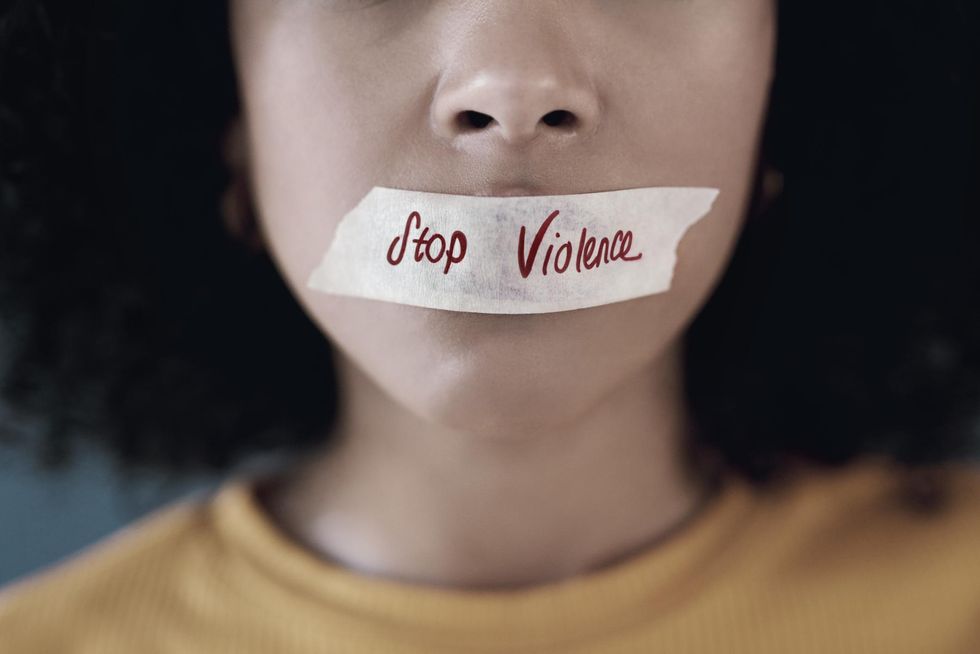
Getty Images
What Exactly Is Femicide?
When I learned what femicide was, my heart sank into my stomach. And I was saddened to learn that my home country of Trinidad tops this list with 6.6 deaths per 100,000 women. We were never valued. It is no surprise that femicide is a worldwide epidemic. Women are murdered across Latin America, South East Asia, the Middle East, Africa, and the Caribbean.
As defined by the World Health Organization (WHO), femicide is the intentional murder of women because they are women, but broader definitions include killings of women or girls.
But let's take a step back to understand that violence against women is a major public health problem and a violation of human rights. According to WHO, violence is the leading cause of injury, disability, and risk factor for other physical, mental, sexual, and reproductive problems. And femicide is happening right here in the United States too. It just looks and sounds a little different than what you might see or read about in other countries.
So, what can we say about femicide in the United States? We can say a whole lot, but almost nothing at all. What I mean by this is that all violence against women is categorized as domestic violence. We don't have a special category for gender-based violence. It's typically ruled as a general homicide. BTW – gender-based violence is the term coined for violence against women and what femicide essentially is. This includes domestic violence and intimate partner violence.
For background and context, the Violence Against Women Act (VAWA) was passed in 1994 to help end domestic violence. VAWA responds to victim needs by holding offenders accountable and allowing for data collection measures to learn more about domestic violence, sexual assault, dating violence, and stalking crimes. And as a result of the government shutdown in 2018, it expired. It was briefly renewed in early 2019 through legislation but expired again. It is currently a stalled bill in the U.S. Senate. However, VAWA is eligible for renewal every five years.
So, what's the holdup then? Domestic violence victims and survivors are just out here unprotected?
The Holdup
- The Boyfriend Loophole: if a person is convicted of domestic violence, current federal law does not prohibit abused or current former dating partners from having firearms, even though more than half of all initiate partner homicide is committed by dating partners.
- Stalker Loophole: if a person is convicted of felony stalking, current federal law only prohibits them from accessing guns, but people convicted of misdemeanor stalking can still legally obtain guns.
The question now is where do we go from here?
Thanks to women like Dawn Wilcox and Rosalind Page, we now have a place to start to understand the extent of the issue. Page has been a nurse for 31 years, she works with the community within the health advocacy space for those who cannot afford insurance or have little to no access to healthcare resources. She also works for the Veterans Affairs Department, lending her expertise to women veterans who have experienced high levels of abuse from within the community and as a serviceperson.
The two, nurses based out of Texas and Arkansas, respectively, have been collecting data and tracking cases of femicide in the United States for roughly five years to fill in the gap in data on femicide and bring awareness to this unseen crisis. Rosalind primarily focuses on femicide in African-American communities, while Dawn focuses on femicide in the U.S. as a whole through her organization Women Count USA to bring awareness, challenge media narratives and societal myths about femicide and domestic violence in the United States.
Rosalind is the founder of Black Femicide US. A Facebook group with more than 23,000 followers focuses on sharing the untold stories of crimes against Black women.
What We Do Know About Femicide In The United States
There is no standard definition of femicide in the United States. Crimes against women, whether it meets the criteria or not, are categorized as domestic violence or defined as intimate partner violence. As defined by the Center for Disease Control (CDC), this includes physical violence, sexual violence, stalking, and psychological aggression. Although the World Health Organization recognizes the killing of women has steadily increased since 2014 in the U.S., it is not recognized as a problem like it is in other countries.
The U.S. doesn't recognize femicide as a special crime, so there is no legal definition of femicide in America because there are no laws for it.
For example, sex crimes are gender-neutral, but there are enhanced penalties if the victim is younger. There are enhanced penalties for domestic violence crimes, but they are hardly used because one can almost never prove the intent was based on gender in a court of law.
Femicide And Black Women
According to the Violence Policy Center, 1,948 women were killed by men in 2017. In the same year, the CDC also reported that Black women experienced the highest rates of homicide than any other racial group in the U.S. The specific issue for Black women is that 4 in 10 Black women experience physical violence in their lifetimes. Twenty percent of Black women have experienced rape during their lifetimes which is higher than other women overall. According to data from the CDC, and the Institute for Women's Policy Research,
Black women face a higher risk of being killed by a man, 2.5 times higher than White women. 9 out of 10 Black women that were murdered knew their killers. The main risk factor is easy access by perpetrators to firearms, both legally and illegally.
From a cultural standpoint, Black women are expected to be strong and able to handle abuse due to the "strong Black women" stereotype.
Data collected and reviewed by Rosalind shows that Southern states appear to have an increase in violence against Black women. This was even before the pandemic and those numbers have seemed to increase. And according to independent data collection, Rosalind concludes on average three Black women or girls are murdered daily. As of today, 230 victims have been recorded.
Getty Images
Femicide Awareness, Advocacy, And Solutions
From a micro and macro level, femicide is an epidemic. There is so much that needs to be done regarding gender-based violence against Black women and all women in the U.S. The most important thing we can do is to have these conversations often. We must be open and honest about this silent crisis in our communities. Men and women alike must acknowledge that this is a problem and urge local, state, and federal politicians to legislate for laws that protect victims and hold perpetrators accountable.
Rosalind Page also points out we can start by, "advocating for stricter sentencing guidelines, having a national Domestic Violence registry (much like the sex offender registry), making femicide a hate crime due to it being a targeted group. More groups dedicated to educating young men and women about what domestic violence looks like. How to recognize that someone may be a victim of it, and getting help. More financial assistance to organizations that help women and children get out of domestic violence situations."
These are only a few ways we can bring awareness to femicide against Black women and femicide in the United States. But it's a start.
Though I have heard stories about women being killed from my days at the district attorney's office or in the news, I personally don't know of anyone who was a victim or is a victim of gender-based violence. I can only hope that we use our voice to speak up. And that we are loud enough to be heard in this ongoing cry for help.
Stop hurting us, stop killing us, and start respecting us.
To learn more about femicide visit Black Femicide US on Facebook and Twitter or Women's Count USA.
Featured image by Getty Images
RELATED


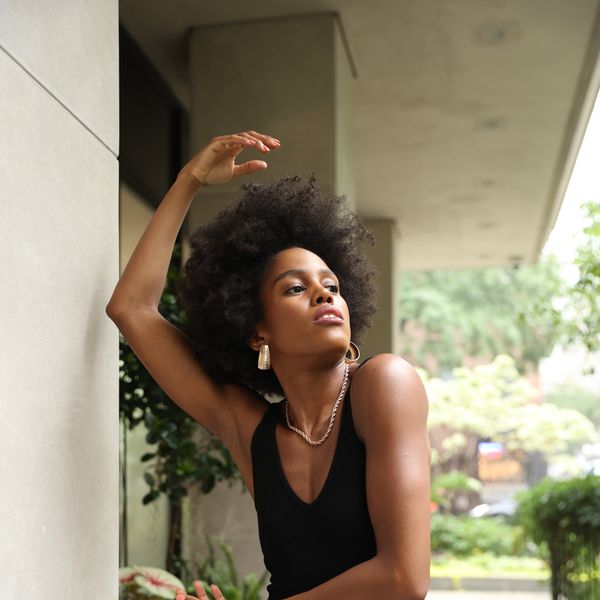


Kayla Nicole says she wore a dress that was once worn by Braxton herself for the Halloween costume. “It’s not a secret Toni is more on the petite side. I’m obsessed with all 5’2” of her,” she tells xoNecole via email. “But I’m 5’10'' and not missing any meals, honey, so to my surprise, when I got the dress and it actually fit, I knew it was destiny.”
The episode was the perfect way for the multihyphenate to take control of her own narrative. By addressing the viral moment on her own platform, she was able to stir the conversation and keep the focus on her adoration for Braxton, an artist she says she grew up listening to and who still makes her most-played playlist every year. Elsewhere, she likely would’ve received questions about whether or not the costume was a subliminal aimed at her ex-boyfriend and his pop star fiancée. “I think that people will try to project their own narratives, right?” she said, hinting at this in the episode. “But, for me personally – I think it’s very important to say this in this moment – I’m not in the business of tearing other women down. I’m in the business of celebrating them.”
Kayla Nicole is among xoNecole’s It Girl 100 Class of 2025, powered by SheaMoisture, recognized in the Viral Voices category for her work in media and the trends she sets on our timelines, all while prioritizing her own mental and physical health. As she puts it: “Yes, I’m curating conversations on my podcast The Pre-Game, and cultivating community with my wellness brand Tribe Therepē.”
Despite being the frequent topic of conversation online, Kayla Nicole says she’s learning to take advantage of her growing social media platform without becoming consumed by it. “I refuse to let the internet consume me. It’s supposed to be a resource and tool for connection, so if it becomes anything beyond that I will log out,” she says.
On The Pre-Game, which launched earlier this year, she has positioned herself as listeners “homegirl.” “There’s definitely a delicate dance between being genuine and oversharing, and I’ve had to learn that the hard way. Now I share from a place of reflection, not reaction,” she says. “If it can help someone feel seen or less alone, I’ll talk about it within reason. But I’ve certainly learned to protect parts of my life that I cherish most. I share what serves connection but doesn’t cost me peace.
"I refuse to let the internet consume me. It’s supposed to be a resource and tool for connection, so if it becomes anything beyond that I will log out."

Credit: Malcolm Roberson
Throughout each episode, she sips a cocktail and addresses trending topics (even when they involve herself). It’s a platform the Pepperdine University alumnus has been preparing to have since she graduated with a degree in broadcast journalism, with a concentration in political science.
“I just knew I was going to end up on a local news network at the head anchor table, breaking high speed chases, and tossing it to the weather girl,” she says. Instead, she ended up working as an assistant at TMZ before covering sports as a freelance reporter. (She’s said she didn’t work for ESPN, despite previous reports saying otherwise.) The Pre-Game combines her love for pop culture and sports in a way that once felt inaccessible to her in traditional media.
She’s not just a podcaster, though. When she’s not behind the mic, taking acting classes or making her New York Fashion Week debut, Kayla Nicole is also busy elevating her wellness brand Tribe Therepē, where she shares her workouts and the workout equipment that helps her look chic while staying fit. She says the brand will add apparel to its line up in early 2026.
“Tribe Therepē has evolved into exactly what I have always envisioned. A community of women who care about being fit not just for the aesthetic, but for their mental and emotional well-being too. It’s grounded. It’s feminine. It’s strong,” she says. “And honestly, it's a reflection of where I am in my life right now. I feel so damn good - mentally, emotionally, and physically. And I am grateful to be in a space where I can pour that love and light back into the community that continues to pour into me.”
Tap into the full It Girl 100 Class of 2025 and meet all the women changing game this year and beyond. See the full list here.
Featured image by Malcolm Roberson

Anyway, I personally think that the less shallow folks out here may contemplate calling things “quits” or they at least distance themselves a bit from their partner (and what I’m referring to is serious relationships) due to all of the stress and strain that oftentimes comes with the holidays whether it be financial, familial, due to their tight schedules or something else.
Listen, I would hate for you and your man to miss the fun and happiness of experiencing this time of year, all because you are so overwhelmed or irritated that you can’t really enjoy it. That’s why I have a few practical tips for how to avoid allowing the typical holiday season stress from INFECTING your relationship.
Manage Your Expectations
 Giphy
GiphyUnmanaged expectations. If there is a main reason why the holiday season tends to be so stress-filled for so many people, I’d bet good money that this is the cause. And when you’re in a long-term relationship, expectations can manifest themselves in all sorts of cryptic and/or unexpected ways. You might have relatives who assume that you are going to be with them for Thanksgiving or Christmas when you have other plans in mind. You might be thinking that you are going to spend one amount for presents while your man is thinking something totally different. When it comes to scheduling, your signals may be crossed.
And you know what? To all of these scenarios, this is where clear and consistent communication come in. Don’t assume anything. Don’t dictate anything either. From now until New Year’s, mutually decide to check in once a week, just to make sure that you are both on the same page as it relates to the holidays and what you both are thinking will come along with it. The less blindsided you both feel, the less stressed out you will be. Trust me on this.
Set (and Keep) a Budget
 Giphy
GiphyOkay, so I read that last year, 36 percent of Americans incurred some type of holiday-related debt. Hmph. Last year, there was still some sense of normalcy in this country, chile, so I can only imagine what finances are gonna look like over the next several weeks. That said, since I don’t know a lot of people who don’t find being broke stressful, make sure that you and your bae set a budget and then stick to it this year — no ifs, ands or buts.
Because really, y’all — it doesn’t make sense to deplete savings and/or max out credit cards for a few days of giggles only to be damn near losing your mind because you don’t know how to make ends meet come Dr. Martin Luther King, Jr. Day.
And by the way, this tip doesn’t just speak to things like food and gifts; I also mean travel. If it doesn’t make a ton of sense (or cents) to be all over the place this year — DON’T BE.
Keep Matthew 5:37 at the Forefront
 Giphy
GiphyIf off the top of your head, you don’t know what Matthew 5:37 says, no worries, here ya go: “But let your ‘Yes’ be ‘Yes,’ and your ‘No,’ ‘No.’ For whatever is more than these is from the evil one.” That verse right there? Oh, it’s a boundaries lifesaver! I say that because do you see “maybe” or “I’ll think about it” in there? Nope. LOL. It says that you should tell people “yes” or “no” and leave it at that — and that complements Anne Lamott’s quote, “’No’ is a complete sentence” impeccably well. Yeah, you’ve got to remember that anything beyond a yes or no to a request is privileged information; you don’t owe anyone details or an explanation.
Besides, if you are really honest with yourself, when someone asks you something and you give a “Umm, let me think about it” kind of reply, more times than not, you already know what your answer is going to be — so why not let you both off of the hook? Give your response. Commit to that. And let everyone (including yourself) get on with their lives and schedules.
I promise you that when it comes to those holiday parties, you are pissing more folks off by not RSVP’ing or doing so and not showing up than just saying, “Thank you but not this year” off the rip.
Remember That Your Personal Space Is Privilege Not a Right
 Giphy
GiphyA friend of mine recently bought a new house and invited me over to come see it. He’s a single man with no children, so as I was taking in all of the space that he had, especially as I walked through his finished basement, I joked about relatives coming to live with him. “Hell no” and “absolutely not” were pretty much his immediate responses as he went on to say that some folks even had the nerve to be offended when he told them that he had no intentions on taking DNA in.
Ain’t it wild how people think that your stuff is their right? And yes, that brings me to my next point. Your home is your sanctuary space. If you want to host folks this year — cool. If not, ALSO COOL. Please don’t let folks (family included) guilt you into how they want you to act or even into what they would do if the shoe was on the other foot. You are not them — and as one of my favorite quotes states, “If two people were exactly alike, one of them would be unnecessary.” (A man by the name Larry Dixon said that.)
Hell, my friends? They know that I am good for sending them random things that they need or even want all throughout the year. Coming over to hang out at my pace, though. Uh-uh. Chalk it up to being a card-carrying member of the ambivert club yet I like keeping my living space personal — and I sleep like a baby, each and every night, for feeling that way.
Always remember that your space, your time, your resources, your energy and shoot, yourself period (including your relationship), are all things that are your own. You get to choose how, when and why you want to share them. The holiday season is certainly no exception.
Cultivate Some “You Two Only” Traditions
 Giphy
GiphyIt’s not uncommon for some couples to hit me up after the holiday season to “detox.” Sometimes it’s due to the financial drama (and sometimes trauma) that they experienced. Sometimes it’s because they allowed their relatives (especially in-laws) to get more into their personal business than they should’ve. More than anything, though, it tends to be because they didn’t get enough quality time together and so ended up feeling “disconnected.”
Please don’t let that happen. Listen, I’m not even a holidays kind of woman and yet, I will absolutely sit myself down with some hot chocolate and chocolate chip cookies to enjoy a Hallmark holiday film or two. Aside from the fact that most of them are lighthearted and sweet, I also like that they usually focus on couples loving on each other amidst all of the holiday beauty and ambiance — which is something that all couples should set aside some time to do.
Maybe it’s a vacation. Maybe it’s a staycation. Or maybe it’s my personal favorite, A SEXCATION. Whether it’s for a few days, the weekend or even overnight — don’t you let the holidays go by without setting aside time for you and your man to celebrate one another. Don’t you dare (check out “Are You Ready To Have Some Very Merry 'Christmas Sex'?”).
GET. SOME. REST.
 Giphy
GiphyI once read that 8 out of 10 people get stressed out over the holidays and 3 out of 10 lose sleep during to it — and when you’re stress-filled and sleep-deprived, that can absolutely lead to hypersensitivity, making mountains out of molehills and even not being in the mood for sex.
Your relationship can’t afford to go through any of this, so definitely make sure to prioritize rest. I don’t care how unrealistic it might seem during this time, sleep should never be seen as a luxury; it will always and forever be a great necessity.
That said, try to get no less than six hours of shut-eye in (check out “6 Fascinating Ways Sex And Sleep Definitely Go Hand In Hand”) and even ask your bae to take a nap with you sometimes (check out “Wanna Have Some Next-Level Sex? Take A Nap, Sis.”). Not only will sleep help to restore your mind, body and spirit but, when it’s with your partner, it’s an act of intimacy that can make you both feel super connected, even in the midst of what might feel like chaos.
___
Holiday season stress is real. Still, never give it the permission or power to throw your relationship off. Put you and your man first and let the holidays be what they are gonna be, chile.
Let’s make things inbox official! Sign up for the xoNecole newsletter for love, wellness, career, and exclusive content delivered straight to your inbox.
Featured image by Shutterstock