


It’s nice to have a podcast when you’re constantly trending online. One week after setting timelines ablaze on Halloween, Kayla Nicole released an episode of her Dear Media pop culture podcast, The Pre-Game, where she took listeners behind the scenes of her viral costume.
The 34-year-old had been torn between dressing up as Beyoncé or Toni Braxton, she says in the episode. She couldn’t decide which version of Bey she’d be, though. Two days before the holiday, she locked in her choice, filming a short recreation of Braxton’s “He Wasn’t Man Enough for Me” music video that has since garnered nearly 6.5M views on TikTok.
Kayla Nicole says she wore a dress that was once worn by Braxton herself for the Halloween costume. “It’s not a secret Toni is more on the petite side. I’m obsessed with all 5’2” of her,” she tells xoNecole via email. “But I’m 5’10'' and not missing any meals, honey, so to my surprise, when I got the dress and it actually fit, I knew it was destiny.”
The episode was the perfect way for the multihyphenate to take control of her own narrative. By addressing the viral moment on her own platform, she was able to stir the conversation and keep the focus on her adoration for Braxton, an artist she says she grew up listening to and who still makes her most-played playlist every year. Elsewhere, she likely would’ve received questions about whether or not the costume was a subliminal aimed at her ex-boyfriend and his pop star fiancée. “I think that people will try to project their own narratives, right?” she said, hinting at this in the episode. “But, for me personally – I think it’s very important to say this in this moment – I’m not in the business of tearing other women down. I’m in the business of celebrating them.”
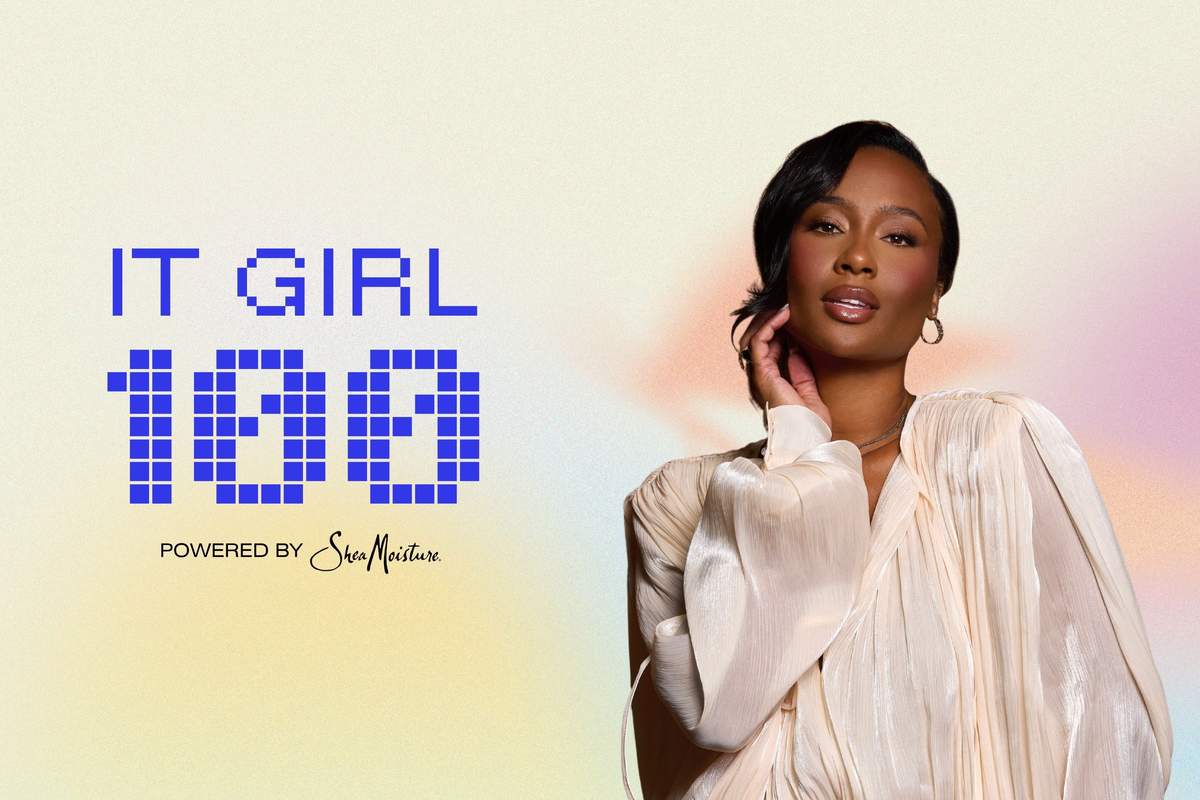
Kayla Nicole is among xoNecole’s It Girl 100 Class of 2025, powered by SheaMoisture, recognized in the Viral Voices category for her work in media and the trends she sets on our timelines, all while prioritizing her own mental and physical health. As she puts it: “Yes, I’m curating conversations on my podcast The Pre-Game, and cultivating community with my wellness brand Tribe Therepē.”
Despite being the frequent topic of conversation online, Kayla Nicole says she’s learning to take advantage of her growing social media platform without becoming consumed by it. “I refuse to let the internet consume me. It’s supposed to be a resource and tool for connection, so if it becomes anything beyond that I will log out,” she says.
On The Pre-Game, which launched earlier this year, she has positioned herself as listeners “homegirl.” “There’s definitely a delicate dance between being genuine and oversharing, and I’ve had to learn that the hard way. Now I share from a place of reflection, not reaction,” she says. “If it can help someone feel seen or less alone, I’ll talk about it within reason. But I’ve certainly learned to protect parts of my life that I cherish most. I share what serves connection but doesn’t cost me peace.
"I refuse to let the internet consume me. It’s supposed to be a resource and tool for connection, so if it becomes anything beyond that I will log out."
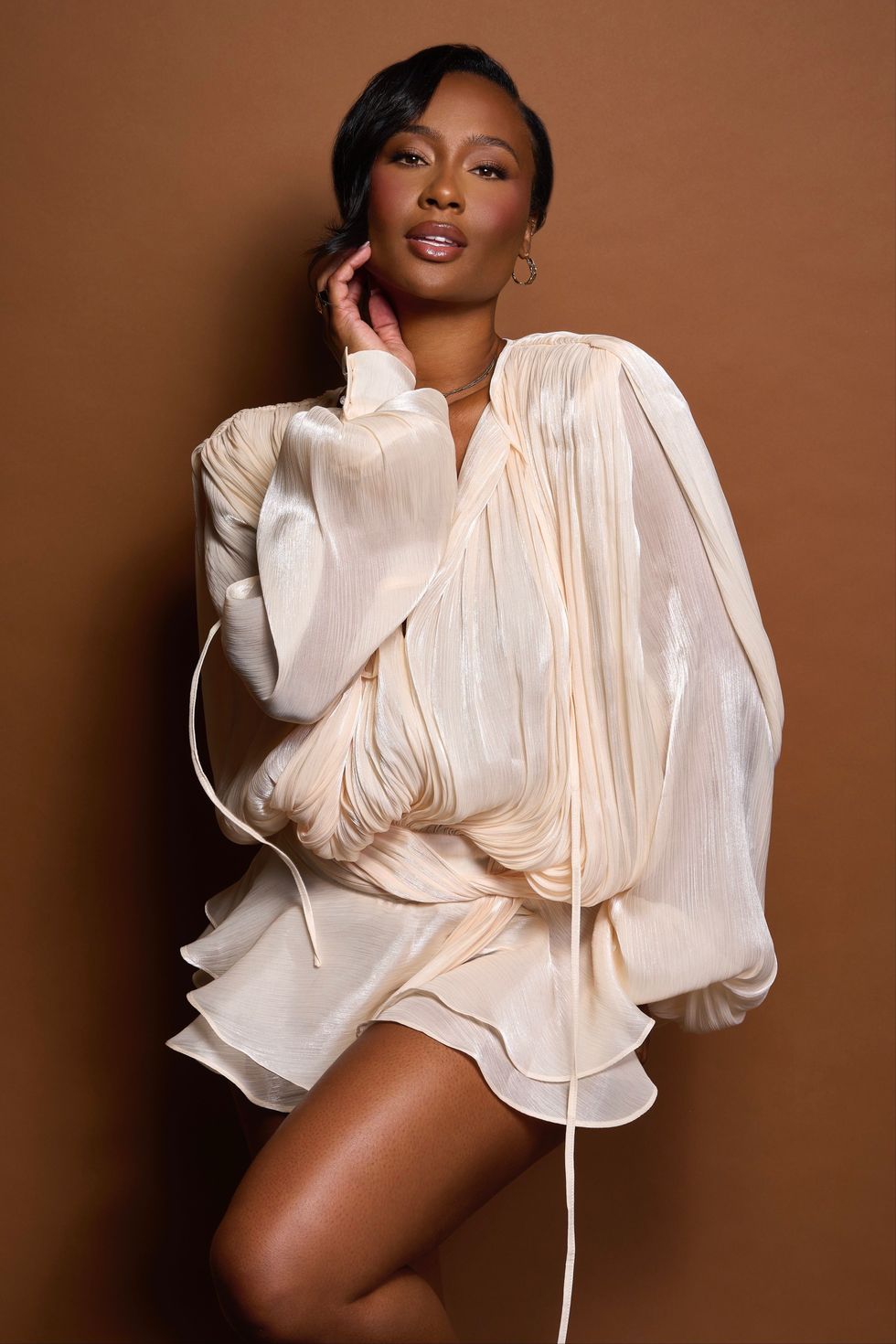
Credit: Malcolm Roberson
Throughout each episode, she sips a cocktail and addresses trending topics (even when they involve herself). It’s a platform the Pepperdine University alumnus has been preparing to have since she graduated with a degree in broadcast journalism, with a concentration in political science.
“I just knew I was going to end up on a local news network at the head anchor table, breaking high speed chases, and tossing it to the weather girl,” she says. Instead, she ended up working as an assistant at TMZ before covering sports as a freelance reporter. (She’s said she didn’t work for ESPN, despite previous reports saying otherwise.) The Pre-Game combines her love for pop culture and sports in a way that once felt inaccessible to her in traditional media.
She’s not just a podcaster, though. When she’s not behind the mic, taking acting classes or making her New York Fashion Week debut, Kayla Nicole is also busy elevating her wellness brand Tribe Therepē, where she shares her workouts and the workout equipment that helps her look chic while staying fit. She says the brand will add apparel to its line up in early 2026.
“Tribe Therepē has evolved into exactly what I have always envisioned. A community of women who care about being fit not just for the aesthetic, but for their mental and emotional well-being too. It’s grounded. It’s feminine. It’s strong,” she says. “And honestly, it's a reflection of where I am in my life right now. I feel so damn good - mentally, emotionally, and physically. And I am grateful to be in a space where I can pour that love and light back into the community that continues to pour into me.”
Tap into the full It Girl 100 Class of 2025 and meet all the women changing game this year and beyond. See the full list here.
Featured image by Malcolm Roberson
RELATED
A Black girl ushering in her era of straight hair was an unspoken but understood tradition, a legacy shaped by women who learned that relaxers were the key to manageability and beauty, as society had defined it.
Though relaxers were a product of their time, the memories many of us share from that era of creamy-white, no-lye formulas also carry a collective trauma. It was one endured in the name of beauty standards we didn’t question until we did. It’s an experience that Courtney Adeleye, founder and CEO of Watch & Sea Beauty, knows all too well. And one that ultimately shaped her path into the hair care space.
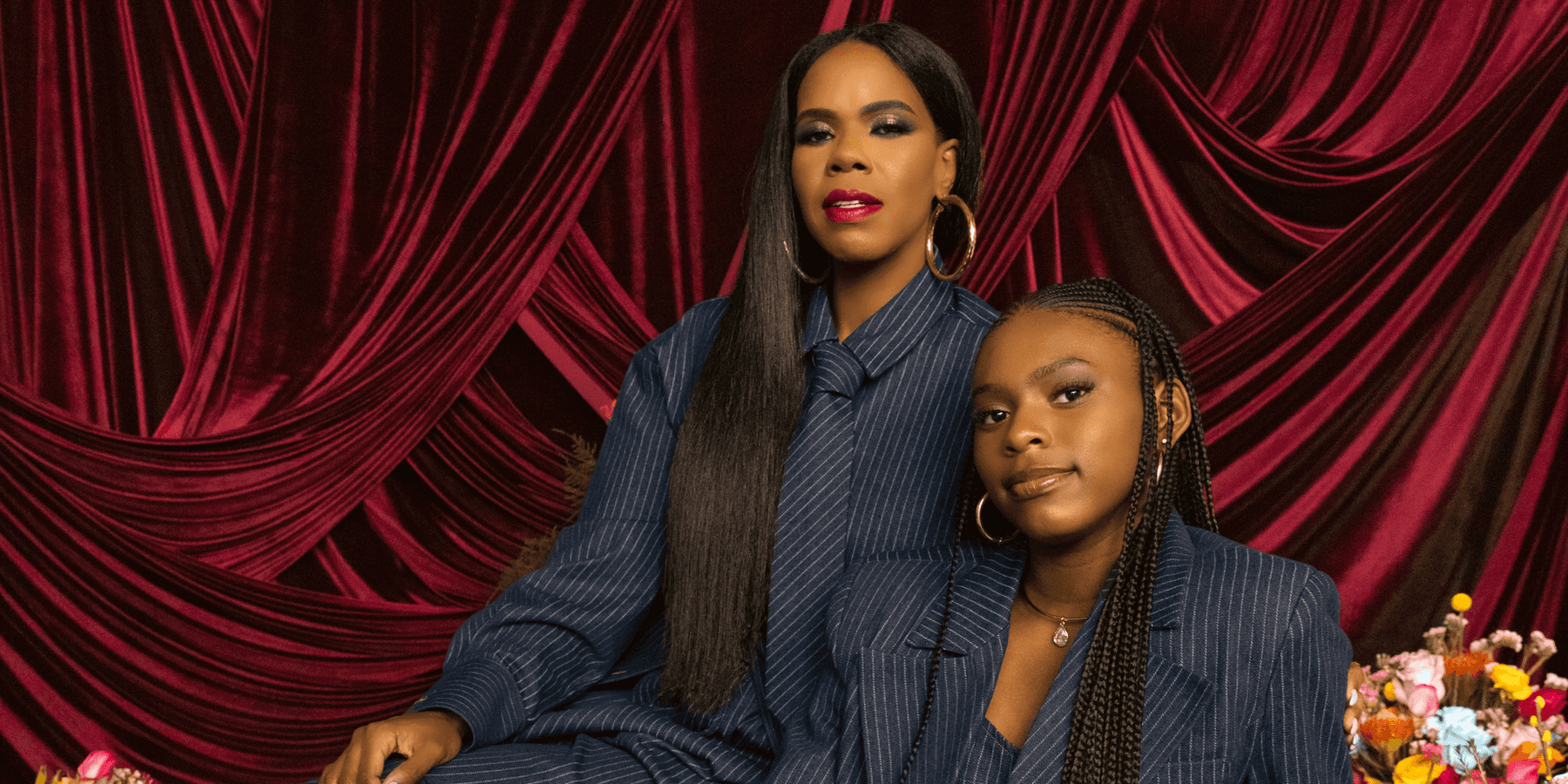
In xoNecole’s Generation to Generation, created in partnership with Target, Courtney reflects on her hair journey alongside her daughter during a BTS video from their mother-daughter photoshoot. As she is seen applying product to her daughter’s braids, she begins talking about her experience with perms before going natural. Her daughter pauses and asks a simple yet revealing question: “What’s a relaxer?”
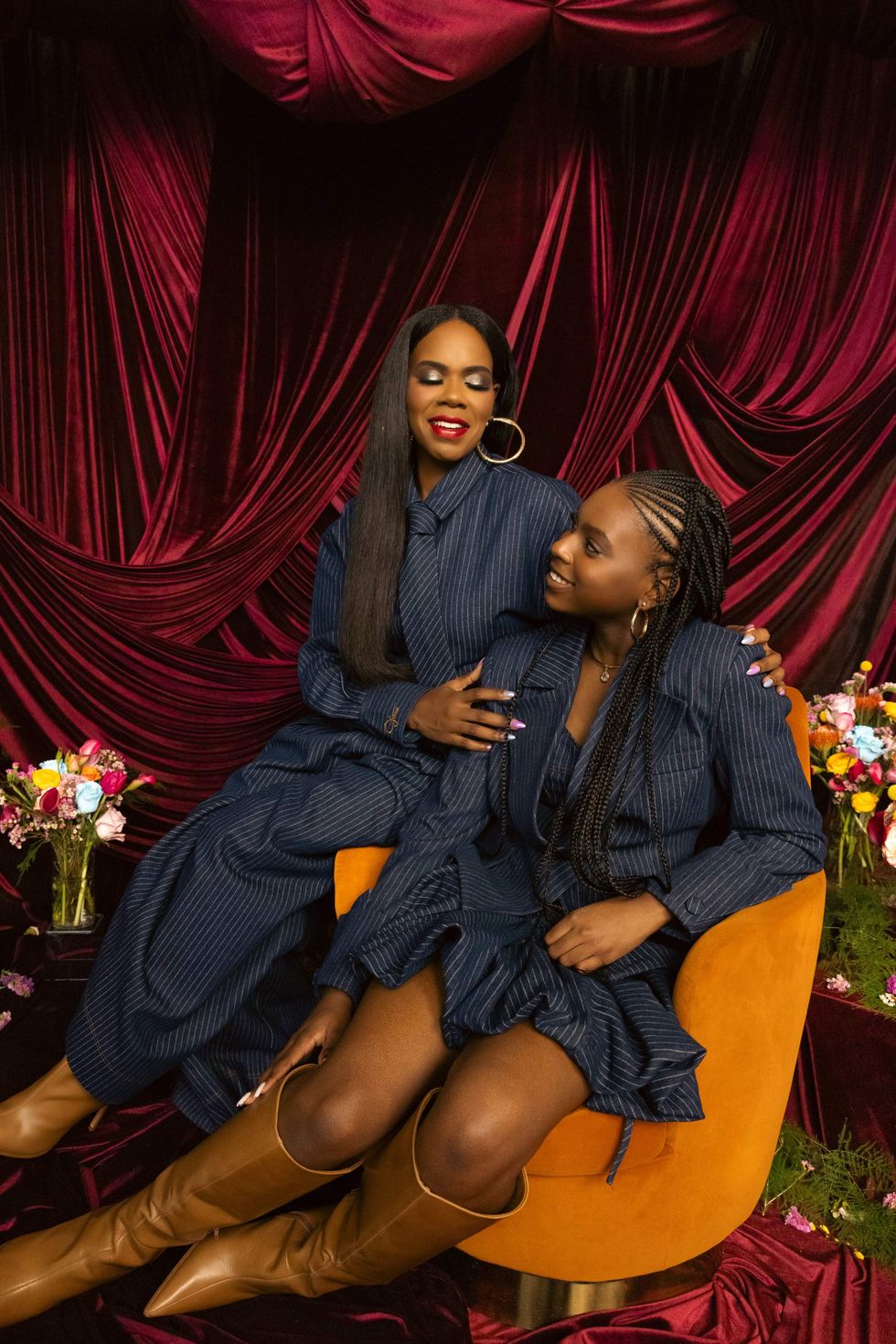
Credit: Darnell Brown
Courtney explains that it’s a chemical process that makes Black hair “pretty much permanently straight.” She then recalls getting her first relaxer at 13, a moment that remains vivid in her memory decades later. “My head was on fire,” she says in the video. “It’s nothing I remember in a good way. It’s something I’m like, ‘This can’t be.’” Their exchange is as striking as it is revelatory.
Unlike generations before her, Courtney’s daughter will never have to know relaxers as the rite of passage that once felt inevitable for so many Black girls. Thanks to entrepreneurs like Courtney, natural hair is no longer treated as the exception but upheld as the standard. As something to be celebrated, nurtured, and protected.
Generation to generation, her work helps ensure that Black girls can grow up with hair journeys rooted in appreciation, care, and choice, instead of one etched in pain, trauma, or assimilation.
In that way, Courtney isn’t just changing how we care for our hair; she’s paying it forward, crafting a legacy her daughters and future generations of Black women after them get to inherit.
That legacy didn’t begin with hair. Courtney credits her own mother, a nurse like she once was, for being the blueprint for what entrepreneurship could look like. “I got a chance to see my mother take a sheet of paper, cut it up in little rectangles, take that to a printing shop, and turn it into a card game,” she tells her daughter in a different scene. Those early lessons planted the seeds for what would later become The Mane Choice, a hair care brand born from her desire to create safer, healthier alternatives for Black hair that didn't compromise on performance.
After starting The Mane Choice in 2013 with just $500, Courtney worked tirelessly to build a hair empire that would go on to surpass $100 million in sales in only six years. She later sold the brand in 2019 for an undisclosed amount, cementing her place among the Black women entrepreneurs who have turned purpose and vision into industry-defining impact.
“Everything that we do is a stepping stone,” Courtney says in the video. “So how do I take what I’ve done as a nurse and turn it into what I’m doing?”
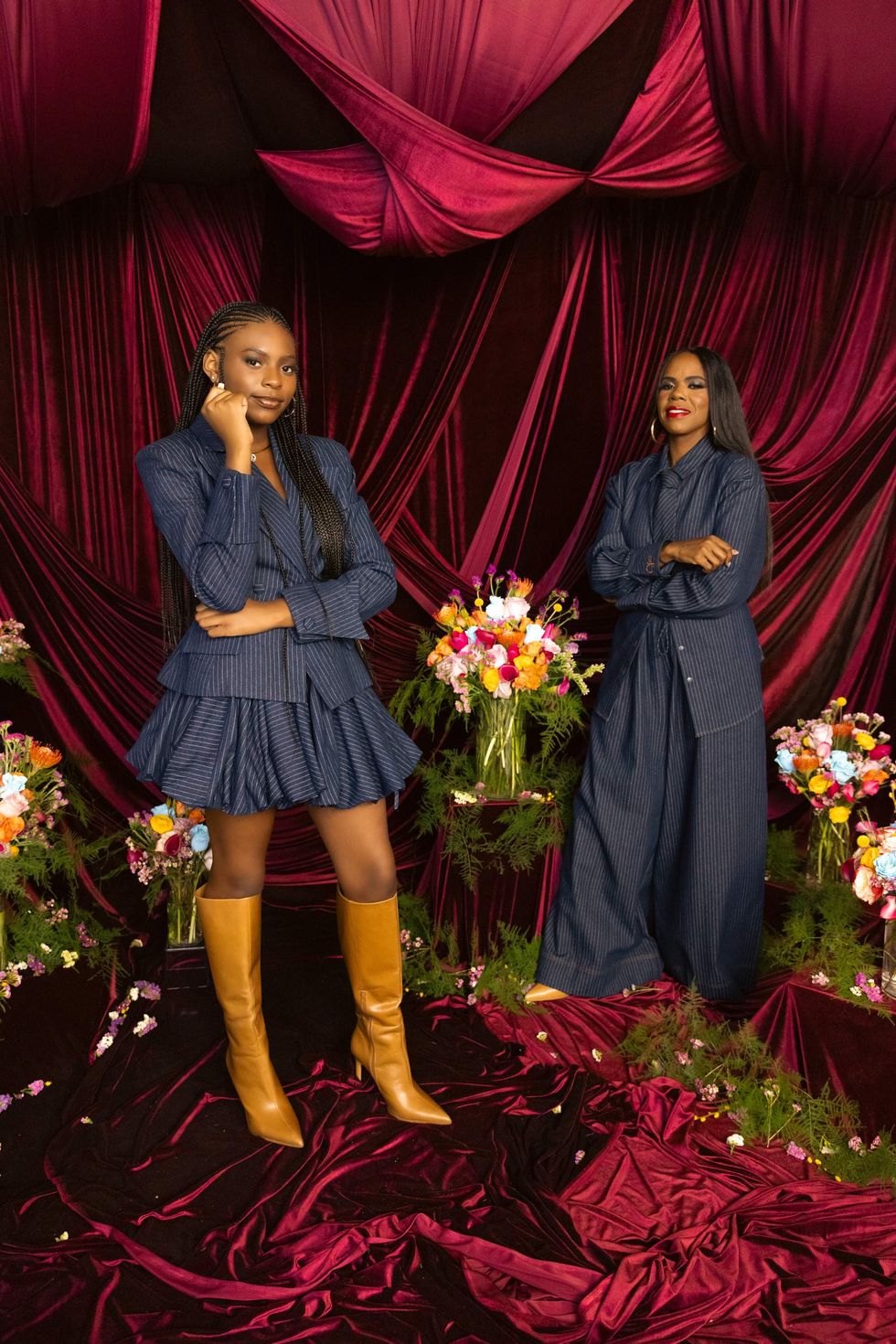
Credit: Darnell Brown
Today, that full circle is the gift that gives, and Black history is still being written, not just by women like Courtney, but by the little Black girls watching, learning, and asking questions that open new doors. Watch & Sea Beauty marks a return for the entrepreneur that reflects purpose, growth, resilience, and trust built over time.
From generation to generation, the way we love and care for our hair tells a bigger story: one of healing, innovation, and what we now have the freedom to choose for ourselves. Courtney’s contributions to Black hair and beauty are truly unmatched, not simply because of what she’s built, but because of what she’s shifted our hair stories: the narrative, the standard, and the future.
Her work is the legacy that lives in what we make possible for the women who come next.
Featured image by Darnell Brown

A Black girl ushering in her era of straight hair was an unspoken but understood tradition, a legacy shaped by women who learned that relaxers were the key to manageability and beauty, as society had defined it.
Though relaxers were a product of their time, the memories many of us share from that era of creamy-white, no-lye formulas also carry a collective trauma. It was one endured in the name of beauty standards we didn’t question until we did. It’s an experience that Courtney Adeleye, founder and CEO of Watch & Sea Beauty, knows all too well. And one that ultimately shaped her path into the hair care space.
In xoNecole’s Generation to Generation, created in partnership with Target, Courtney reflects on her hair journey alongside her daughter during a BTS video from their mother-daughter photoshoot. As she is seen applying product to her daughter’s braids, she begins talking about her experience with perms before going natural. Her daughter pauses and asks a simple yet revealing question: “What’s a relaxer?”
Credit: Darnell Brown
Courtney explains that it’s a chemical process that makes Black hair “pretty much permanently straight.” She then recalls getting her first relaxer at 13, a moment that remains vivid in her memory decades later. “My head was on fire,” she says in the video. “It’s nothing I remember in a good way. It’s something I’m like, ‘This can’t be.’” Their exchange is as striking as it is revelatory.
Unlike generations before her, Courtney’s daughter will never have to know relaxers as the rite of passage that once felt inevitable for so many Black girls. Thanks to entrepreneurs like Courtney, natural hair is no longer treated as the exception but upheld as the standard. As something to be celebrated, nurtured, and protected.
Generation to generation, her work helps ensure that Black girls can grow up with hair journeys rooted in appreciation, care, and choice, instead of one etched in pain, trauma, or assimilation.
In that way, Courtney isn’t just changing how we care for our hair; she’s paying it forward, crafting a legacy her daughters and future generations of Black women after them get to inherit.
That legacy didn’t begin with hair. Courtney credits her own mother, a nurse like she once was, for being the blueprint for what entrepreneurship could look like. “I got a chance to see my mother take a sheet of paper, cut it up in little rectangles, take that to a printing shop, and turn it into a card game,” she tells her daughter in a different scene. Those early lessons planted the seeds for what would later become The Mane Choice, a hair care brand born from her desire to create safer, healthier alternatives for Black hair that didn't compromise on performance.
After starting The Mane Choice in 2013 with just $500, Courtney worked tirelessly to build a hair empire that would go on to surpass $100 million in sales in only six years. She later sold the brand in 2019 for an undisclosed amount, cementing her place among the Black women entrepreneurs who have turned purpose and vision into industry-defining impact.
“Everything that we do is a stepping stone,” Courtney says in the video. “So how do I take what I’ve done as a nurse and turn it into what I’m doing?”
Credit: Darnell Brown
Today, that full circle is the gift that gives, and Black history is still being written, not just by women like Courtney, but by the little Black girls watching, learning, and asking questions that open new doors. Watch & Sea Beauty marks a return for the entrepreneur that reflects purpose, growth, resilience, and trust built over time.
From generation to generation, the way we love and care for our hair tells a bigger story: one of healing, innovation, and what we now have the freedom to choose for ourselves. Courtney’s contributions to Black hair and beauty are truly unmatched, not simply because of what she’s built, but because of what she’s shifted our hair stories: the narrative, the standard, and the future.
Her work is the legacy that lives in what we make possible for the women who come next.
Featured image by Darnell Brown