



Aight. Even if the title of this article seems a bit…odd at first, hear me out. For starters, let’s begin with some data. Did you know that, reportedly, somewhere around 53 percent of people under 30, 37 percent of people between the ages of 30-49, and 20 percent of those between the ages of 50-64 either have used or are currently using dating apps (for the record, and I think this will come as no surprise, Gen Z actually prefers meeting people online)?
As far as the dating apps that led to some type of long-term success, a survey from The Knot says that Hinge leads the pack (with 35 percent) followed by Tinder (with 25 percent). Then, if you take into account a Lovehoney survey of 2000 people, which revealed that 60 percent of men and 42 percent of women have admitted to having sex on the first date — uh-huh, now do you see why a piece like this is both relevant and necessary?
Virtual dating isn’t going anywhere any time soon, and although “first date sex” used to be somewhat taboo, clearly, that isn’t even close to being the case anymore. So, since both are a big part of our culture, let’s explore how to approach merging the two (if you’ve been wondering if you should…that is).
What’s the Purpose/Agenda of a First Date?
 Giphy
GiphyOkay, so let’s start by laying a bit of foundation because, personally, I am a big believer that when we don’t know the purpose of something, it’s almost guaranteed that on some level and in some way, we are going to either misuse or abuse it — dating is no exception. And what’s the purpose of a first date?
To get to know if there is more of a connection than just an initial attraction or surface-level chemistry (check out “What's The Difference Between Chemistry And Compatibility?”). And honestly, that’s why all of the social media debates about women expecting a $200 date off the rip and men expecting sex in return if that does indeed go down are nothing short of nauseating to me. ON BOTH SIDES, all it sounds like is a transactional hustle.
Nothing about that type of motive says, “I’m trying to see if there is something real here;” both are about nothing more than how much juice is in the squeeze (and that’s putting it politely — SMDH).
Although there are dozens of reasons why I think dating has become so chaotic for a lot of people these days, here are two of the main ones as it relates to this article in particular:
1) More people need to remember what author M. Scott Peck once said, "Until you value yourself, you won't value your time. Until you value your time, you will not do anything with it." When it comes to first dates, specifically, that’s why I don’t get what all of the drama is behind coffee dates. While TikTok is telling you that agreeing to those means that you are settling, if you value your time, you absolutely aren’t — especially if there have been no real conversations prior to the initial meet-up.
A coffee date or drinks after work doesn’t say, “He’s cheap,” so much as, “If there’s something here, then we can build on that. If there’s not, you got 30 minutes of my time; no harm, no foul.” Time is something that you can never get back, so why waste it? Besides, if you feel the need to brag about going on an expensive dinner, go out with some of your girls, and y’all split the tab.
At least you’ll know that you’re going to have a good time because you actually know those people (by the way, if that triggers you, that already reveals a lot, as far as your motives are concerned). No one should need a date to validate them — especially a first date. If they do, there’s some stuff going on that a date, a man nor a relationship is going to fix (just sayin’).
2) Talk to the long-term couples who are 50+ (if they’re 50, that now means they were in college in the early 90s, by the way). Ask them about what dating was like when they were younger and single. I’m wiling to bet that, for one thing, expensive ass first dates weren’t even on their radar, and two, it was rare that they went out with someone before talking to them, at least a couple of times on the phone.
Yep, as semi-antiquated as it may sound in the world that we live in now, it was pretty standard that if you saw a stranger who caught your attention, you would get their number, talk on the phone to see how the two of you vibe and then some successful conversations down the line, if you both believed that something was there between the two of you, you would mutually decide to go on a date.
And because some type of foundation was already laid, if the first date did end up going beyond just coffee or drinks, it was because the two of you had already invested time — you already knew that you wanted more. And honestly, to me, that is one of the benefits of virtual dating or talking on the phone for a couple of weeks before going on a first date — you can actually get to know someone…beyond what you can get out of them.
“Sex on the First Date” Has Levels to It
 Giphy
GiphyAnd when you take into account all of what I just said, it seems to me that there are two kinds of “sex on the first date” scenarios that should be pondered. One is the kind where you meet someone, text each other about a place to meet up, get to know each other for 1-2 hours max, and then go back to somebody’s place to get it in. The other is when you meet someone and, whether online or by phone, you both decide to ease into things by talking first…for a while. Then, after an awesome first date, sex comes naturally to both of you.
And how long is a while? I mean, because this platform is for women — until you feel safe. Until you have asked the kind of questions that make you feel like you want to spend more time with him on a deeper level. Until you get that his intentions aren’t just shallow…or physical. Until you know that you aren’t just attracted to him — you know that there are things about his personality and character that you actually like. Until you want to go on a first date.
And unless the two of you are talking for 2-3 hours a day, every day, for a week straight, you can’t really come to this kind of conclusion in record time. It may take a few weeks or even a few months — and that is perfectly fine. Someone who wants to know you for you is going to be okay with communication being set as the foundation of the relationship that the two of you are potentially building anyway, so…by the time that you both decide to meet up for a first date, it will be the icing on the cake.
And, because you actually like him for him, the kind of date that he plans, you won’t be grading it based on nothing more than the price tag; it’s a win for all parties involved.
Okay, so if you do decide to go the route of a “slow build,” you do take your time before a first date, and then you do decide to have sex with him — does it constitute as “first date sex”? I mean, technically, probably. However, the reputation of first-date sex is someone is getting to know everything about you (you know what I mean) without knowing much about you at all. On the other hand, when you opt to communicate for some time before a first date (and the sex that follows), it’s not so casual…and yes, that makes it — different.
3 Questions to Ask Yourself Before Sleeping with Anyone New
 Giphy
GiphyNow that I hope I’ve brought some peace of mind to if it’s a standard “sex on the first date” type of situation if you’ve been virtually hanging out with someone for a while, let’s talk about some of the main things that you should consider before having sex with anyone who you are beginning to interact with on a physical level.
What is the energy like?
One day, I’m going to write about how true it is that energy is exchanged during sex. A big part of the reason is that we are sources of energy — and honestly, the kind of energy that you experience with someone when you’re not in their physical presence vs. when you actually are? It tends to be quite different.
Therefore, it’s a good idea to intentionally “tap in” to see what kind of vibes are exchanged when you’re around each other before deciding to take it there because there is a possibility that how you feel about someone in person may be different than how you do online or over the phone.
What type of sexual accountability conversations have you had?
One of the biggest mistakes that people make is thinking that real life is a soap opera or a rom-com — for instance, you can have sex, and there be no real consequences. Chile, please.
Don’t ever put yourself in the position where you think that the two of you connect so well that you shouldn’t talk about how often you both get tested, what your approaches are to birth control, what your sexual deal-breakers are, and what your sexual expectations may be.
And listen, if all of this seems like too much for a first date, then you already have your answer about if you should have sex after the first date…RIGHT? Because how is it that you don’t want to get into his mind, yet you’re okay with him getting inside of you? Nope. Uh-uh. Nada.
What would sex on the first date accomplish?
Back when I used to mentor teen moms in public schools here in Nashville, I would always call them out whenever they told me that unprotected sex “just happened.” NO. IT. DOES. NOT. There are so many steps involved, from calling the person, setting up a plan, meeting up, pulling off clothes, etc. — all of us have plenty of opportunities to rethink what we are doing. Same goes for first-date sex.
Listen, no matter how much you are feeling the guy from communicating before the date and even more once you meet him, take the time to ask yourself, “What will sex right now accomplish?” An accomplishment is something that brings about credibility. An accomplishment is something that makes you feel fulfilled. An accomplishment is something that causes you to believe that you achieved something great.
That said, if all you’re after is a good time and maybe an orgasm, perhaps sex on the first date will be an accomplishment for you. However, if after starting off solid with this new guy, if you’re not sure what sex will accomplish, in the grand scheme of things, pause until you know. There is absolutely nothing wrong with that — and the right guy for you will agree.
____
Bottom line, if it’s a first real date and you do have sex after it, yes — you just had sex on a first date. Although, when there has been a foundation built prior to it, via healthy communication…it’s less risky and something that you (typically) can feel more confident about — especially if you take all of what I just said into (serious) account.
Sis, when it comes to giving any of yourself to someone new — online or not — please make sure that you do.
Let’s make things inbox official! Sign up for the xoNecole newsletter for love, wellness, career, and exclusive content delivered straight to your inbox.
Featured image andreswd/Getty Images
RELATED




Kayla Nicole says she wore a dress that was once worn by Braxton herself for the Halloween costume. “It’s not a secret Toni is more on the petite side. I’m obsessed with all 5’2” of her,” she tells xoNecole via email. “But I’m 5’10'' and not missing any meals, honey, so to my surprise, when I got the dress and it actually fit, I knew it was destiny.”
The episode was the perfect way for the multihyphenate to take control of her own narrative. By addressing the viral moment on her own platform, she was able to stir the conversation and keep the focus on her adoration for Braxton, an artist she says she grew up listening to and who still makes her most-played playlist every year. Elsewhere, she likely would’ve received questions about whether or not the costume was a subliminal aimed at her ex-boyfriend and his pop star fiancée. “I think that people will try to project their own narratives, right?” she said, hinting at this in the episode. “But, for me personally – I think it’s very important to say this in this moment – I’m not in the business of tearing other women down. I’m in the business of celebrating them.”
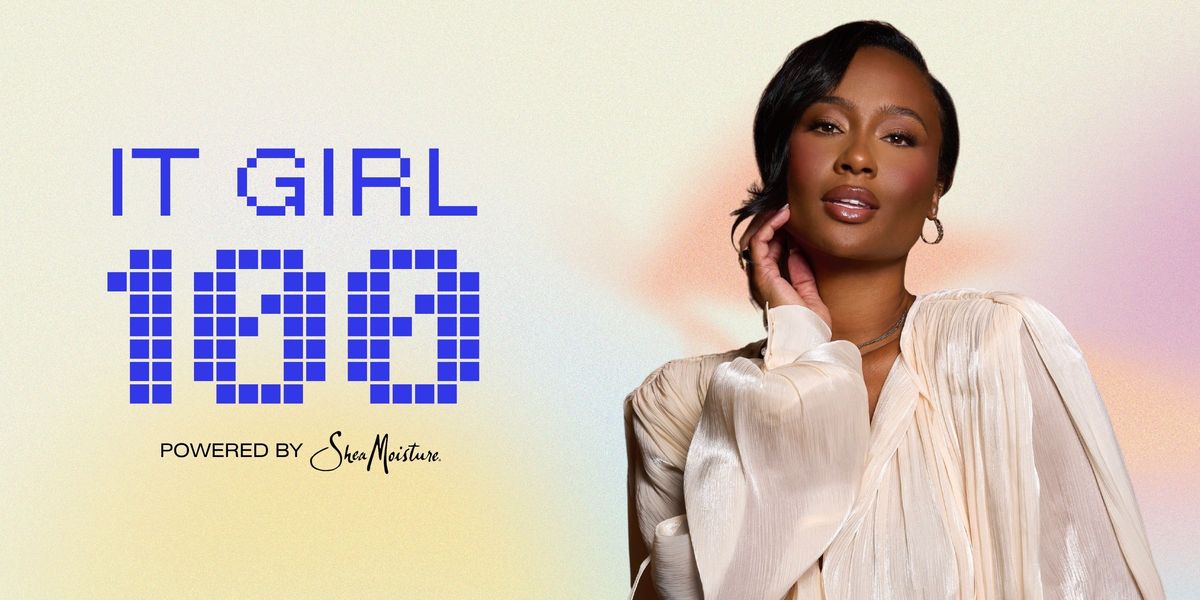
Kayla Nicole is among xoNecole’s It Girl 100 Class of 2025, powered by SheaMoisture, recognized in the Viral Voices category for her work in media and the trends she sets on our timelines, all while prioritizing her own mental and physical health. As she puts it: “Yes, I’m curating conversations on my podcast The Pre-Game, and cultivating community with my wellness brand Tribe Therepē.”
Despite being the frequent topic of conversation online, Kayla Nicole says she’s learning to take advantage of her growing social media platform without becoming consumed by it. “I refuse to let the internet consume me. It’s supposed to be a resource and tool for connection, so if it becomes anything beyond that I will log out,” she says.
On The Pre-Game, which launched earlier this year, she has positioned herself as listeners “homegirl.” “There’s definitely a delicate dance between being genuine and oversharing, and I’ve had to learn that the hard way. Now I share from a place of reflection, not reaction,” she says. “If it can help someone feel seen or less alone, I’ll talk about it within reason. But I’ve certainly learned to protect parts of my life that I cherish most. I share what serves connection but doesn’t cost me peace.
"I refuse to let the internet consume me. It’s supposed to be a resource and tool for connection, so if it becomes anything beyond that I will log out."

Credit: Malcolm Roberson
Throughout each episode, she sips a cocktail and addresses trending topics (even when they involve herself). It’s a platform the Pepperdine University alumnus has been preparing to have since she graduated with a degree in broadcast journalism, with a concentration in political science.
“I just knew I was going to end up on a local news network at the head anchor table, breaking high speed chases, and tossing it to the weather girl,” she says. Instead, she ended up working as an assistant at TMZ before covering sports as a freelance reporter. (She’s said she didn’t work for ESPN, despite previous reports saying otherwise.) The Pre-Game combines her love for pop culture and sports in a way that once felt inaccessible to her in traditional media.
She’s not just a podcaster, though. When she’s not behind the mic, taking acting classes or making her New York Fashion Week debut, Kayla Nicole is also busy elevating her wellness brand Tribe Therepē, where she shares her workouts and the workout equipment that helps her look chic while staying fit. She says the brand will add apparel to its line up in early 2026.
“Tribe Therepē has evolved into exactly what I have always envisioned. A community of women who care about being fit not just for the aesthetic, but for their mental and emotional well-being too. It’s grounded. It’s feminine. It’s strong,” she says. “And honestly, it's a reflection of where I am in my life right now. I feel so damn good - mentally, emotionally, and physically. And I am grateful to be in a space where I can pour that love and light back into the community that continues to pour into me.”
Tap into the full It Girl 100 Class of 2025 and meet all the women changing game this year and beyond. See the full list here.
Featured image by Malcolm Roberson
My main motive? Mostly, I hope that it will serve as a solid reminder to embrace all of the things that you adore about this time of year, so long as you do it in moderation and you weigh the costs.
Especially as far as drinking alcohol is concerned.
PRO: Manages Blood Sugar Levels
 Giphy
GiphyHere’s something that you may have never seen coming. Were you aware of the fact that alcohol can actually help to stabilize your blood sugar? Yep, according to the American Diabetes Association, so long as you leave it to no more than 1-2 cocktails a day, alcohol may be able to lower your A1C levels. Pretty cool, right?
CON: It’s a Carcinogen
 Giphy
GiphyAlcohol is a carcinogen. The reason why this should somewhat alarm you is because carcinogens are things (like tobacco, UV rays, processed meats, etc.) that can increase your chances of being diagnosed with cancer (especially mouth, throat, esophagus, stomach and breast cancer). There are various ways this happens including the fact that alcohol, specifically, can hinder your body from breaking down certain nutrients, it can cause your estrogen levels to spike and alcohol can also cause certain toxins to damage your DNA and certain bodily proteins over time.
PRO: Cultivates Euphoric Feelings
 Giphy
GiphyIf you find yourself feeling more euphoric while you’re enjoying a drink, it’s not all up in your head. Although, for the more part, alcohol is considered to be a depressant, when consumed in small amounts, it can provide a stimulant effect. This happens due to the fact that when you first start to consume alcohol, it causes the production of the feel-good hormone known as dopamine to increase — and since dopamine makes us all feel more relaxed and confident while heightening our senses of pleasure too…well, there you have it.
CON: May Increase Anxiety/Depression
 Giphy
GiphyAs they say, “what goes up, most come down” at some point — and that is what you have to be careful of when it comes to alcohol consumption. For instance, when you drink alcohol, although it tends to initially cause your dopamine levels to uptick, because it is a temporary bodily response, sometimes the dips are lower than the rises…and that is when anxiety starts to kick in. A similar point is made with depression because oftentimes, people with depression-related symptoms, will use alcohol as a way to deflect from what’s really going on with them — and that can make them feel even worse than ever once the buzz of alcohol starts to wear off.
PRO: Has Some Heart-Related Benefits
 Giphy
GiphyWhen it comes to your heart, there are interesting findings surrounding its relationship to alcohol. For instance, some research states that, so long as the consumption is moderate, alcohol can actually help to increase the good cholesterol in your system while also breaking down proteins that can potentially lead to blood clots; both of these factors alone can reduce your chances of dying from heart disease.
CON: Packs on Pounds
 Giphy
GiphyIt’s no secret that alcohol tends to contain quite a few calories. That’s why, it’s not uncommon for people who’ve lost weight to mention “I’ve stopped drinking” as one of the causes for the shed pounds. That’s not to say that there aren’t some alcoholic beverages that have less calories than others including vodka (133 calories per serving), white wine (148 calories per serving) and tequila (99 calories per shot). Just keep in mind that the more you drink, the more calories get into your system and the more weight you stand to gain.
PRO: Lowers Inhibitions
 Giphy
GiphyAlthough you really should only be uninhibited around people who you absolutely trust, if that person is your partner and you’re looking to have a pretty — eh hem — active evening, alcohol can certainly help to make that happen. The science of it all is the prefrontal cortex of your brain is what regulates your inhibitions and levels of self-control. Meanwhile, alcohol suppresses your inhibitions which can cause you to be more spontaneous and open to trying things that you might not immediately do if you were sober. And with the right individual, that can be sexually beneficial (emphasis on “right person”).
CON: Makes It Harder to Orgasm
 Giphy
GiphyOn the other hand, as odd as it may seem (in light of what I just said), if you have too much alcohol in your system, it could make climaxing difficult. That’s because orgasms happen, in part, due to your nervous system being stimulated — and since alcohol is technically a depressant…well, it could reduce nerve sensitivity (especially as far as your clitoris goes) for you while making it challenging for your partner to remain erect or have consistent stamina. And yeah, that sucks.
____
‘Tis the season. And with that, if some wassails or hot buttered rums are in your immediate future — hey, don’t let me stop you — not even a lil’ bit.
All I’m saying is now that you know what alcoholic drinks have to offer (both ways), you can know exactly how to incorporate them into your holiday plans. Enjoy!
Let’s make things inbox official! Sign up for the xoNecole newsletter for love, wellness, career, and exclusive content delivered straight to your inbox.
Featured image by Unsplash